What Proven Means in Men's Supplement Marketing: Reading Pages That Promise the Best Proven Male Enhancement Pills
Quick Answer: What Does Proven Mean on a Supplement Page?
In men's supplement advertising, proven almost never means what it means in medicine. A drug is proven when regulators assess large controlled trials and authorise a specific claim; a dietary supplement is never approved for effectiveness before sale, so proven on a supplement page usually means an ingredient somewhere in the formula has appeared in published research. Those are different standards, and the gap between them is where most of the marketing in this category lives.
- Legally: supplements may make structure-function claims only, always with the FDA disclaimer.
- Scientifically: evidence belongs to an ingredient at a dose, not to a finished blend.
- Practically: ask what was tested, in how many people, against what comparison.
Three different people mean three different things by proven
The word is doing very different work depending on who says it. To a regulator, proven describes a claim a manufacturer has been authorised to make after a formal evidence assessment — which, for effectiveness, essentially never happens with dietary supplements. To a researcher, proven is a word to avoid entirely; the literature deals in effect sizes, confidence intervals and replication, and even strong findings are described as supported rather than proven. To a copywriter, proven is an adjective that raises conversion rates and carries no fixed definition at all.
None of that means every page using the word is dishonest. It means the word transfers zero information on its own. The informative content is always downstream: what specifically was tested, at what dose, in whom, for how long, compared with what, and by whom. A page that answers those six questions has told you something. A page that says proven and moves on has told you nothing.
This matters for shoppers because search demand for the best proven male enhancement pills is enormous, and the pages competing for it have every incentive to use the word without unpacking it. Learning the unpacking takes about ten minutes and permanently changes how the category reads.
What the law actually allows a supplement to say
Under the Dietary Supplement Health and Education Act, dietary supplements in the United States are regulated as food, not as drugs. The FDA does not approve them for effectiveness before they reach the market. Manufacturers carry the responsibility for safety and for the truthfulness of their claims, and the agency acts afterwards if a product is unsafe or a claim is false.
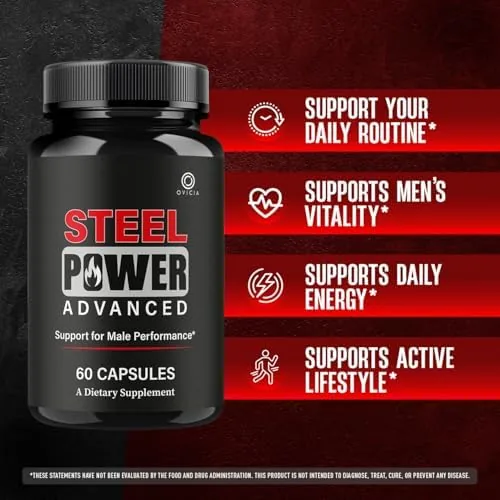
That framework permits exactly one family of claims about what a product does: structure-function claims. These describe an effect on the normal structure or function of the body — supports healthy circulation, helps maintain normal energy levels, supports male vitality. They may not state or imply that the product treats, cures, prevents or diagnoses a disease. That is why the phrasing on legitimate men's supplement pages is so consistently hedged, and why the asterisk always leads to the same sentence: These statements have not been evaluated by the Food and Drug Administration. This product is not intended to diagnose, treat, cure or prevent any disease.
Advertising is policed separately by the Federal Trade Commission, which requires health claims to be backed by competent and reliable scientific evidence. That phrase is deliberately flexible, and in practice it means well-designed human studies relevant to the claim being made. It does not mean a single small trial on one ingredient, and it certainly does not mean a laboratory experiment on cells.
Proven is not a regulatory category for dietary supplements. There is no application, no assessment and no approval to be granted. When the word appears on a men's supplement page, it is a marketing adjective wearing a lab coat.
Judge a formula by its panel, not its adjectives
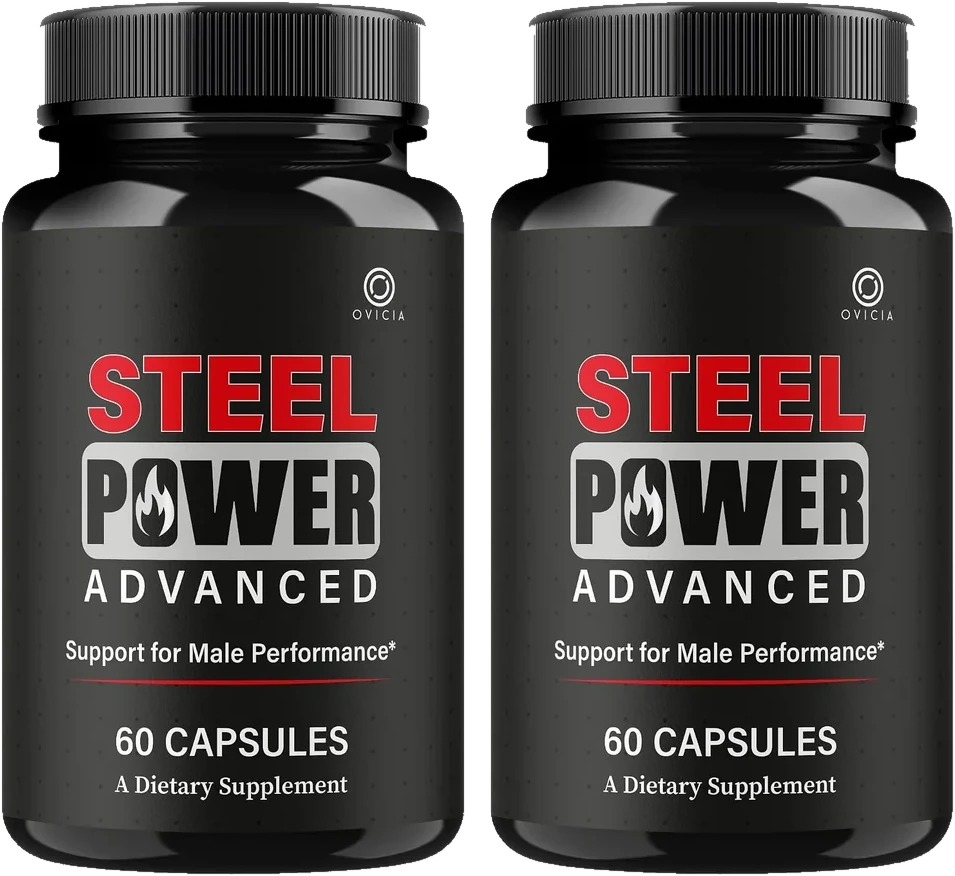
Steel Power names its actives rather than burying them in a blend, so you can at least see which ingredients have published human research behind them.
Check the Official Steel Power OfferThe evidence ladder, from cell culture to replication
Behind the word proven sits a ladder of study types, and marketing tends to quote the bottom rungs while implying the top. Understanding the ladder is the fastest way to price a claim accurately.
At the bottom are laboratory and cell studies. They establish plausibility and mechanism, and they are genuinely valuable to researchers, but a compound that behaves interestingly in a dish tells you almost nothing about a capsule swallowed by a person. Animal studies come next, adding whole-organism complexity but leaving the species gap intact; rodent doses are also frequently far higher than anything used in humans.
Above those sit human observational studies, which can spot associations but cannot separate cause from correlation. Then come small randomised controlled trials, which are the first rung where a supplement claim starts to earn respect — provided there is a placebo group. Larger controlled trials with validated outcome measures rank higher again, and at the top sits independent replication: a different research group, a different sample, the same result.
Almost nothing in the men's supplement market reaches the top two rungs as a finished product. That is the honest state of the category, and it is why the responsible framing is support rather than treatment. Our evidence-tier ranking of male vitality ingredients applies this ladder ingredient by ingredient.
How the same study becomes four different claims
The table below shows how one hypothetical finding — an ingredient improved a vascular measure in a small controlled trial — can be described at four levels of honesty, all of them technically defensible.
| Framing | How it reads | What it hides | Honesty |
|---|---|---|---|
| Accurate | One small controlled trial found a modest improvement in a vascular measure at a multi-gram dose | Nothing material | High |
| Compressed | Clinically studied ingredient for circulation support | Sample size, dose, effect size | Acceptable |
| Transferred | Our formula contains a clinically studied ingredient | That the product uses a fraction of the studied dose | Weak |
| Inflated | Scientifically proven to restore performance | Everything, plus it crosses into a drug claim | None |
The third row is the most common and the most slippery, because every individual word in it is true. Nothing has been fabricated; the claim has simply been moved from the ingredient to the product, which is where its meaning quietly falls out. This is the single most useful pattern to recognise in the category.
A four-question test for pages selling the best proven male enhancement pills
Rather than trying to grade every claim, apply the same four questions to any page and let the answers sort it.
Was the product tested, or an ingredient? If it is the ingredient, the claim belongs to the ingredient. Check the label amount against the study amount before crediting the product with anything.
Is there a comparison group? Without a placebo arm you cannot distinguish the supplement from expectation, regression to the mean and the general tendency of people who start taking something to also start sleeping and training better.
Is the outcome validated? Established instruments such as the IIEF have known properties and known thresholds. A bespoke satisfaction survey designed by the seller has none. We cover this in detail in our piece on reading IIEF scores without hype.
Does the language stay inside structure-function limits? A page that says support, may help and maintain is operating inside the rules. A page that promises to restore, fix, cure or reverse has left them, and a seller willing to break that rule is not a reliable narrator on any of the others.
Anyone comparing what the market calls best male enhancement natural supplements, or trying to work out where to buy testosterone booster products without wading through hype, will find these four questions do more filtering than any ranked list. For a worked example on a single formula, see our Steel Power ingredient breakdown.
What this article cannot settle for you
Three honest limits close this out.
Unproven is not the same as ineffective. The absence of a large trial is a statement about the research budget of an industry, not a verdict on an ingredient. Many botanicals with thin data may turn out to help modestly; the point is that nobody currently knows, and confident claims in either direction are unsupported. That uncertainty is also why product category matters more than product promises, a distinction we draw out in male enhancement pills versus testosterone boosters.
No framework predicts your individual response. Even a well-evidenced ingredient produces a range of outcomes across a trial population. Baseline status, diet, sleep, training, stress and medication all move the result, and none of them is visible on a product page. This is also why a ranked list cannot do the job a label can — we show how those lists are assembled in how ranked lists of men’s pills get built, and set out workable selection criteria in how to choose a testosterone booster in 2026.
Nothing here is a substitute for medical assessment. Fatigue, low drive and erectile difficulty have medical explanations that a supplement cannot address, some of them serious and some of them straightforwardly treatable. The NIH and Mayo Clinic both publish guidance on when these symptoms warrant a proper evaluation, and persistent symptoms warrant one.
Medical note: this article is general information, not medical advice. Speak to a healthcare professional before starting any supplement, especially if you take prescription medication — several circulation-support ingredients interact with nitrates and blood-pressure drugs.
Frequently asked questions
Does proven mean FDA approved for a supplement?
No. The FDA does not approve dietary supplements for effectiveness before they go on sale. Manufacturers are responsible for making sure their products are safe and their claims are truthful, and every structure-function claim must carry a disclaimer stating the claim has not been evaluated by the FDA. Proven on a supplement page is never a regulatory approval.
What is a structure-function claim?
A structure-function claim describes how a nutrient affects the normal structure or function of the body, such as supports healthy circulation or helps maintain normal energy levels. It is the only kind of claim a supplement may make about itself without drug approval. Claims that a product treats, cures or prevents a disease are drug claims and are not permitted on dietary supplements.
If an ingredient is studied, is the product proven?
No. Evidence attaches to a specific ingredient at a specific dose in a specific population. A finished blend containing that ingredient at a smaller amount has not inherited the finding. The useful question is whether the label lists the studied active at an amount close to what the research used, not whether the ingredient has ever been studied by anyone.
What would honest proof look like in this category?
Honest proof would mean the finished product tested against a placebo in a decent number of people, for a realistic duration, with a validated outcome measure and independent funding, then repeated by a separate group. Almost no men's supplement clears that bar. Recognising that is not cynicism; it is the correct baseline for reading any claim in this market.
Scientific references
- NIH Office of Dietary Supplements — fact sheets and evidence summaries for health professionals
- NIH NCCIH — Know the Science: how to evaluate health information and claims
- Mayo Clinic — dietary supplements: what to know before you buy
- Kuchakulla M et al. A systematic review and evidence-based analysis of ingredients in popular male testosterone and erectile dysfunction supplements. International Journal of Impotence Research, 2021 (PMID 32358510)
- Harvard Health — dietary supplements: do they help or hurt?
Steel Power, claims and all
Structure-function language, a published panel and no promises it cannot keep. Check the official store and judge the label yourself.