Reading IIEF Scores in Male Supplement Studies: How to Judge Claims About the Best Male Enhancement Pills That Work
Quick Answer: What Does an IIEF Score in a Supplement Study Mean?
The IIEF is a validated questionnaire in which men rate their own experience over the previous four weeks, and its erectile function domain runs from 6 to 30 points. Researchers generally treat a change of about four points on that domain as the smallest difference a man would actually notice, so a study reporting a one or two point gain has found something statistically visible but not necessarily meaningful in daily life. Because it is a self-report instrument, IIEF results also absorb the placebo effect, seasonal mood and how the questions were introduced, which is exactly why the control group matters more than the headline.
- Scale to know: erectile function domain, 6 to 30 points, higher is better.
- Threshold to remember: roughly four points before a change is considered clinically important.
- Question to ask: what did the placebo group score, and how many men were in the trial?

Why one questionnaire sits underneath almost every claim
If you trace a men's supplement claim back far enough, you usually arrive at the International Index of Erectile Function. It was developed in the late 1990s as an outcome measure for clinical trials, and it became the standard because it was validated across languages and populations and because regulators accepted it. Almost every serious study in this space uses it or its shortened five-item version, the IIEF-5, sometimes called the Sexual Health Inventory for Men.
That ubiquity is useful. It means results from different studies can be compared on a common scale, and it means a marketing page quoting "an improvement" can be checked against a known metric rather than against a feeling. It also means anyone who understands the scale can spot when a claim has been stretched. Learning to read IIEF numbers is the single highest-leverage skill for evaluating this category, more useful than memorising ingredient lists. It is also the fastest way to see through a ranking, and our account of how ranked lists of men's pills get built explains why those league tables so rarely rest on numbers like these.
The full IIEF contains fifteen questions grouped into five domains: erectile function, orgasmic function, sexual desire, intercourse satisfaction and overall satisfaction. The erectile function domain carries six of those questions and is scored from 6 to 30. When a study reports "IIEF improved", it should say which domain and by how many points. If it does not, that is your first warning.
What the numbers actually mean on the scale
Score bands on the erectile function domain are conventionally described in ranges, with lower totals indicating more severe difficulty and totals in the mid-to-high twenties considered within a normal range. The exact cut-points differ slightly between publications, which is itself worth knowing: a study that reclassifies men into a "normal" band may have moved them across a boundary by two points, not transformed anyone's life.
The concept that matters most here is the minimal clinically important difference, or MCID. It is the smallest change on an instrument that a patient would recognise as a real improvement rather than statistical noise. For the IIEF erectile function domain, the MCID is commonly described as around four points, with the exact figure varying by baseline severity — men who start lower generally need a larger absolute change to notice it.
This gives you a practical filter. When a claim rests on a two-point move, the honest description is "measurable in the data, below the threshold researchers use for meaningfulness". That is not nothing, and in a supplement context it may still be a genuine signal. It is simply not the same as the transformation the copy implies.
Read the label before you read the claim
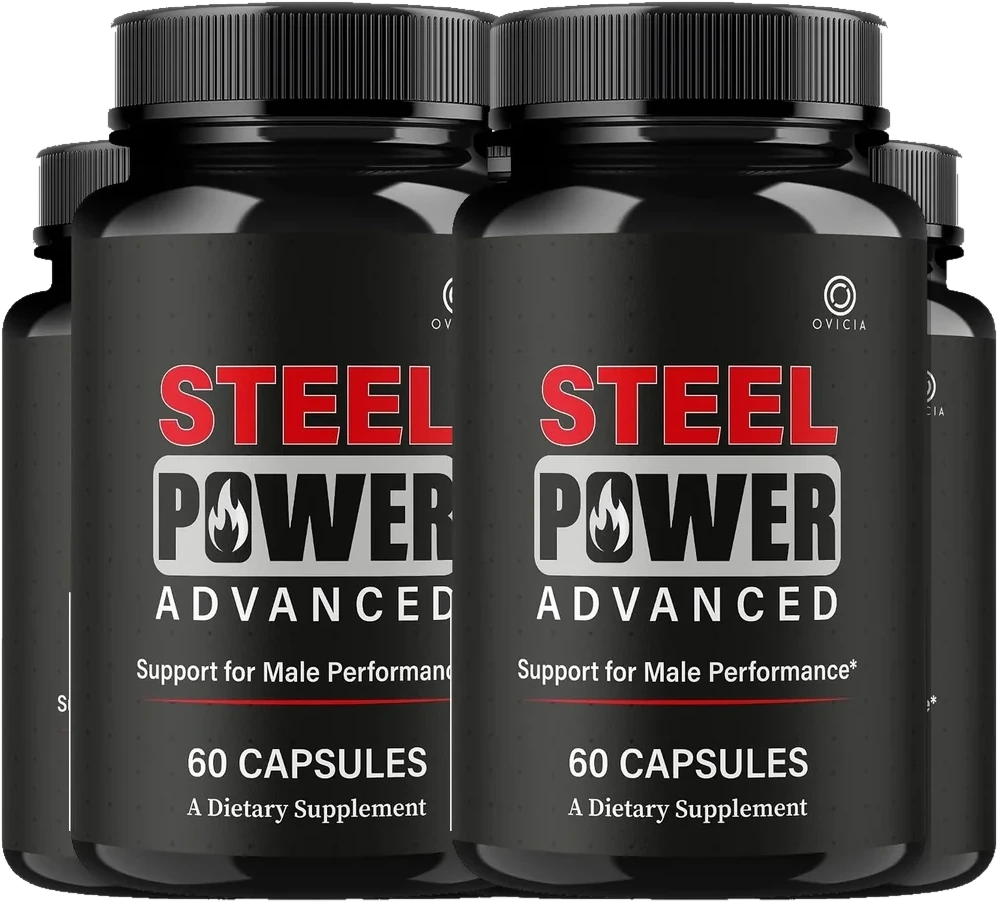
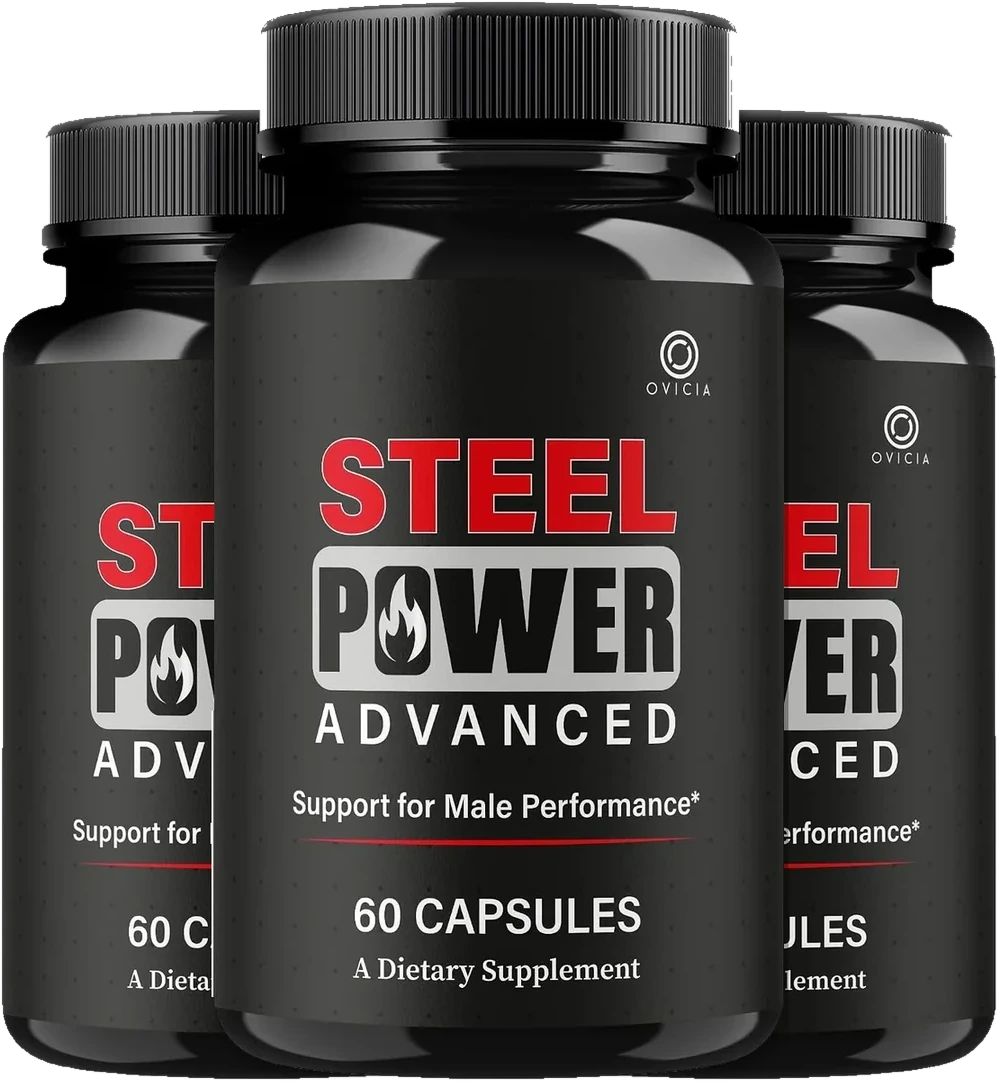
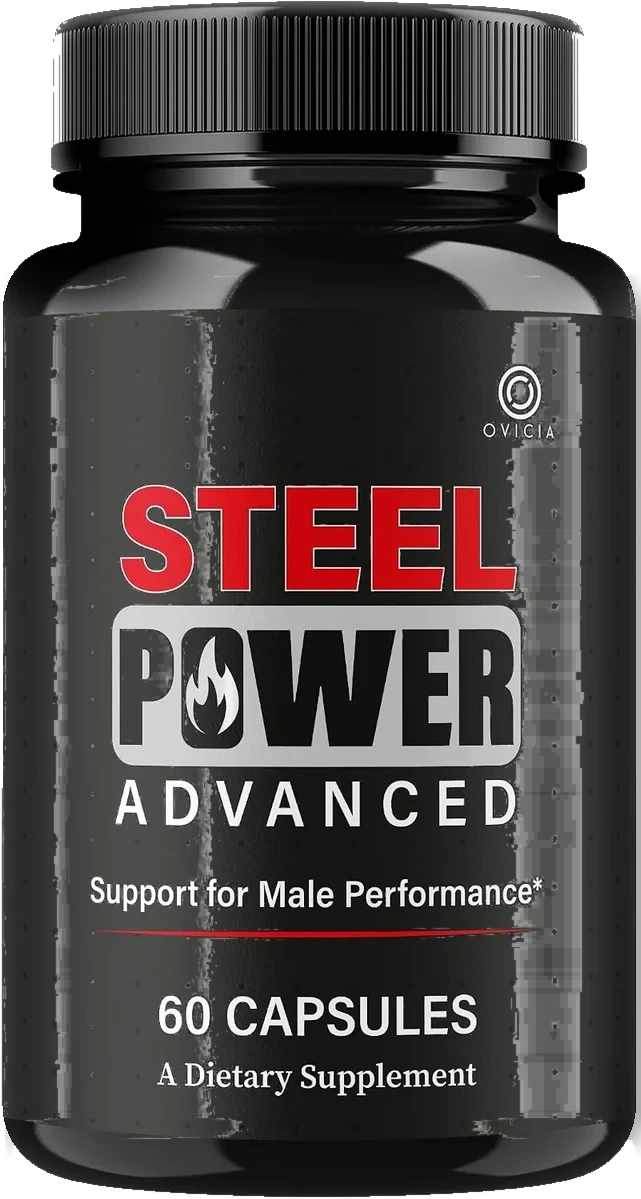
Steel Power lists its five actives openly, so you can at least see which researched ingredients are in the bottle before you weigh the claims.
Check the Official Steel Power OfferThe four questions that separate a real result from a headline
When you meet an IIEF claim, four questions resolve most of the ambiguity quickly.
Which domain? The erectile function domain is the demanding one. Desire and overall satisfaction are softer, more mood-sensitive domains, and a gain there is easier to produce. Marketing that says "IIEF score improved" without naming the domain has usually chosen the easiest one.
Compared with what? A single-arm study in which everyone takes the product and the score rises tells you almost nothing, because placebo effects in sexual health research are famously large. The only informative comparison is against a matched placebo group over the same period.
How many men, for how long? Twenty participants over four weeks produces a fragile result no matter how good it looks. Effects that survive in larger groups over three months are worth more than dramatic effects in tiny ones.
Who paid? Industry funding does not invalidate a study, but it changes how much independent replication you should want before treating the finding as settled. The most honest papers state their funding source plainly in the first page.
A two-point IIEF gain over placebo in forty men across eight weeks is a modest, interesting signal. Written as "a 12% improvement in sexual function", the same number becomes a headline. Nothing in the data changed; only the framing did.
How claims about the best male enhancement pills that work get built from small numbers
The gap between a paper and a sales page is usually built with four familiar moves, and none of them requires anyone to lie outright. Percentages replace points, because a percentage of a low baseline looks bigger. The placebo arm disappears from the summary, because the absolute rise in the active group is larger than the difference between arms. A soft domain is quoted while the erectile function domain is omitted. And an ingredient study becomes a product claim, even though the finished blend was never tested.
Once you can see those four moves, most of the noise in the category resolves. Shoppers hunting for the best male enhancement pills that work can then evaluate a page in about a minute: find the number, find the domain, find the comparison group, find the sample size. If any of the four is missing, the claim is decorative. This is also the fastest way to compare products advertised as best male enhancement pills for stamina, where the outcome measures are often borrowed from exercise research rather than sexual health research and are not interchangeable.
For the ingredient side of that same evaluation, our evidence-tier ranking of male vitality ingredients sorts the actives by how much human data stands behind each one, and the Steel Power ingredient breakdown shows how one formula lines up against those tiers.

IIEF at a glance: domains, ranges and what a change is worth
The table below is the reference to keep in mind when a study or a sales page quotes a number.
| Domain or version | Items | Score range | How to read a change |
|---|---|---|---|
| Erectile function domain | 6 | 6–30 | Strongest measure; about four points before it is considered clinically important |
| Orgasmic function | 2 | 0–10 | Narrow range, so small point moves look proportionally large |
| Sexual desire | 2 | 2–10 | Highly mood-sensitive; strongly affected by expectation |
| Intercourse satisfaction | 3 | 0–15 | Depends on partner and frequency, not only on the participant |
| Overall satisfaction | 2 | 2–10 | The softest domain; easiest place to produce a positive number |
| IIEF-5 short form | 5 | 5–25 | Screening tool; convenient but less granular than the full index |
One structural point explains a lot of the confusion around these scores: the IIEF measures erectile and sexual function, not hormone status, so it is the right instrument for circulation-focused products and the wrong one for hormonal ones. That distinction is the whole subject of male enhancement pills versus testosterone boosters, and the tolerability side of the same trials is covered in testosterone booster side effects explained.
What the IIEF cannot do
The instrument has real limits, and reading it well means holding them in mind.
It is entirely self-reported. Nothing in the IIEF is measured by a device or a blood test. It records what a man remembers and chooses to report about the previous four weeks, which means memory, mood, relationship context and expectation all get folded into the score. That is not a flaw in the design — the experience is the outcome that matters — but it is why an uncontrolled study is close to uninterpretable.
It assumes recent sexual activity. Several items ask about attempts at intercourse in the last four weeks. Men without a partner, or with an inactive period for unrelated reasons, score lower for reasons that have nothing to do with function, which distorts small samples in particular.
It measures function, not cause. A low score is a signal, not a diagnosis. The underlying reason might be vascular, hormonal, neurological, psychological or a side effect of medication, and those have completely different answers. This is the point at which a supplement page should stop and a clinician should start. Mayo Clinic and the NIH both publish plain-language explanations of when erectile difficulty warrants medical assessment, and persistent symptoms belong in that conversation rather than in a shopping cart.
It cannot be used to claim a supplement treats anything. Dietary supplements are not permitted to claim they treat, cure or prevent erectile dysfunction, and no IIEF number changes that. The legitimate framing is support for normal circulation, energy and vitality — which is a narrower claim than most advertising makes. The vocabulary used to blur that line is worth knowing in detail, and we take it apart in what “proven” really means in men’s supplement marketing.
Medical note: this article is general information, not medical advice. Persistent erectile difficulty can be an early sign of cardiovascular or metabolic problems and deserves a proper assessment. Speak to a healthcare professional before starting any supplement, especially if you take prescription medication.
Frequently asked questions
What is the IIEF and what does it measure?
The International Index of Erectile Function is a validated self-report questionnaire. Men answer questions about the previous four weeks across several domains, including erectile function, orgasmic function, desire, intercourse satisfaction and overall satisfaction. It measures reported experience over a recent window. It does not measure blood flow, hormone levels or anything a laboratory can confirm.
How big does an IIEF change have to be to matter?
Researchers use a minimal clinically important difference to answer that, and for the erectile function domain it is usually described as roughly four points, varying with baseline severity. A change of one or two points on a 30-point domain is statistically reportable but sits inside the range a man might report simply because the month went better.
Why do supplement pages quote percentage improvements instead of points?
Because percentages sound larger. A two-point move on a low baseline can be presented as a double-digit percentage improvement while remaining below the threshold researchers consider meaningful. Whenever a page quotes a percentage, look for the starting score, the point change and the number of participants before deciding what it is worth.
Has any dietary supplement been shown to work as well as prescription treatment?
No. Prescription treatments for erectile dysfunction have been tested in large registration trials with effect sizes no supplement has matched. Dietary supplements are not medicines, cannot claim to treat erectile dysfunction, and should not be compared to prescription therapy. Anyone with persistent symptoms should speak to a clinician rather than self-treat.
Scientific references
- Rosen RC et al. The international index of erectile function (IIEF): a multidimensional scale for assessment of erectile dysfunction. Urology, 1997 (PMID 9187685)
- Rosen RC et al. Minimal clinically important differences in the erectile function domain of the International Index of Erectile Function scale. European Urology, 2011 (PMID 21855209)
- NIH NIDDK — Erectile Dysfunction: definition, causes and assessment
- Mayo Clinic — Erectile dysfunction: symptoms, causes and when to see a doctor
- Barbonetti A et al. Nutraceutical interventions for erectile dysfunction: a systematic review and network meta-analysis. The Journal of Sexual Medicine, 2024 (PMID 39279185)
Steel Power, measured against the label
If you have been comparing the best male enhancement pills online, check the amounts on the panel against the doses used in published research — then decide.