How Ranked Lists of Men's Pills Get Built Behind the Scenes, and Why the Best Male Enhancement Pills Ranked First Are Rarely Ranked on Evidence
Quick Answer: Who Decides the Order on These Ranked Lists?
In most cases the publisher does, and the publisher earns a commission when you buy. Commission rates and conversion rates differ between products, so the ordering on an affiliate-funded list tends to follow revenue at least as closely as it follows evidence — usually without anyone lying, because there is no objective ranking to depart from in the first place. Independent laboratory testing is rare, scoring rubrics are usually invented, and the same ingredient panels get copied from one site to the next.
- Read first: the affiliate disclosure, before the ranking itself.
- Then check: whether a methodology is stated and whether milligram amounts appear.
- Discount heavily: any score out of ten with no published criteria behind it.
The economics that shape the order
Start with the money, because everything else follows from it. Affiliate publishing works on commission: a page recommends a product, a reader clicks through, and if a purchase happens the publisher earns a share. That model funds an enormous share of the health content on the open web, and it is entirely legal. It is also, unavoidably, an incentive that points in a particular direction.
Commission rates are not uniform. One product may pay a modest percentage on a single bottle; another may pay a much larger share on a multi-bottle bundle, sometimes with recurring rebills attached. A publisher choosing what to put in position one is choosing between products with materially different revenue per click, and it takes unusual discipline to put the low-paying product on top. Most pages do not exercise that discipline, and readers rarely see the trade-off being made.
This is why the Federal Trade Commission requires affiliate relationships to be disclosed clearly and prominently rather than buried in a footer. The disclosure does not fix the incentive, but it lets you price it. We publish ours in the footer of every page on this site, including this one, and we would rather you read it before the recommendations than after.
The same commercial logic shapes the “best deal” and “discount code” pages that sit alongside these rankings, which is a subject in its own right — we cover it in how supplement discount codes and free shipping actually work.
Where the scores come from
The score out of ten is the most persuasive element on a ranking page and often the least substantiated. A genuine rating needs three visible things: defined criteria, stated weightings, and the underlying data for each product. Almost no page in this category publishes all three, which means the number cannot be reproduced by anyone, including the person who wrote it.
The tell is compression. On a real scoring system applied honestly, products spread out; some score poorly. On a typical ranking page every product scores between 8.4 and 9.7, because every product on the page is monetised and nobody wants to publish a bad score for something they earn from. When the range is that narrow, the score is functioning as decoration rather than measurement.
Sub-scores make this worse by adding apparent precision. A page listing "Ingredient Quality 9.2, Value 8.8, Effectiveness 9.4" implies four separate assessments took place. In practice these numbers are usually assigned to look plausible relative to the total the writer already decided on. Precision without a method is not rigour; it is design.
A ranking is only as good as the thing being ranked against. If a page never states what it measured, the order tells you about the publisher's contracts, not about the products.
Skip the ranking, read the panel
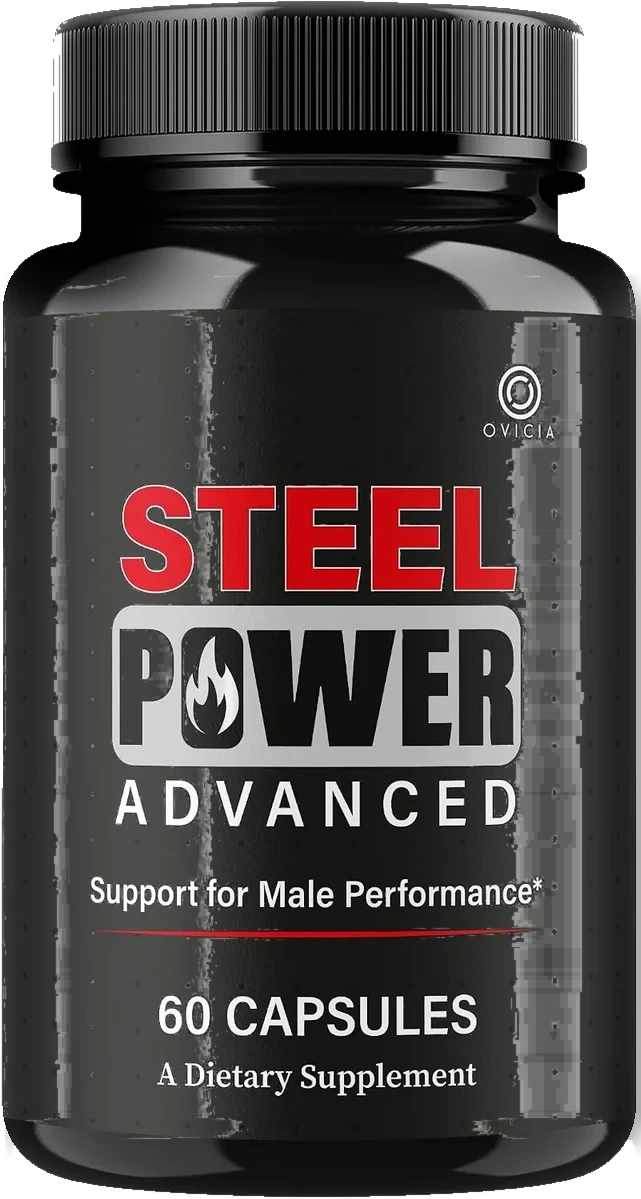
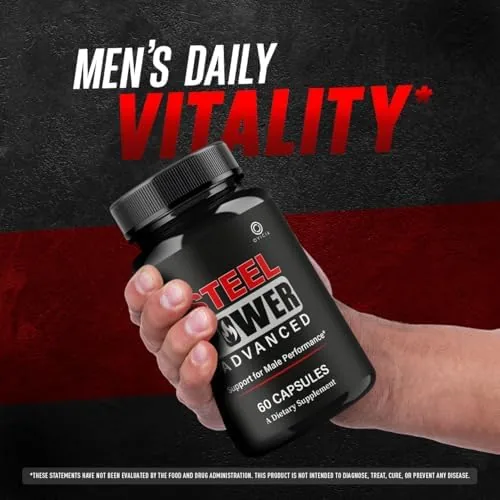
Steel Power names its five actives instead of pooling them in a blend. Compare those against the doses used in published research and make your own call.
Check the Official Steel Power OfferWhat almost nobody actually tests
The word "tested" appears constantly on these pages and rarely means laboratory work. Genuine third-party testing covers identity, potency and contamination: confirming the botanical is the species claimed, confirming the milligram amounts match the panel, and screening for heavy metals, microbial contamination and undeclared pharmaceutical adulterants. Each of those tests costs money per product, and a page ranking ten products would need to buy and test ten products.
The adulteration issue is the one worth taking seriously. The FDA maintains a public database of tainted products marketed as dietary supplements, and sexual enhancement products are one of the most heavily represented categories in it — typically for containing undeclared prescription drug ingredients. That database is free to search and takes a minute to use. A ranking page that never mentions it has skipped the single most consequential safety check available to a consumer.
What most pages substitute is a certification badge collected from the manufacturer's own site. Manufacturing standards such as GMP registration are meaningful, but they describe the facility's processes, not an independent assay of the specific batch in your hand. Reading a badge is not the same as reading a certificate of analysis.
Anatomy of a filler list versus a useful one
The differences are consistent enough to tabulate. Nothing here requires insider knowledge; every signal in the left column is visible on the page itself.
| Signal | Filler list | Useful list |
|---|---|---|
| Affiliate disclosure | Absent, or in small text at the very bottom | Stated near the top, in plain language |
| Methodology | Not described, or "our expert panel" | Criteria and weightings written out |
| Dosing detail | Ingredient names only | Milligram amounts compared to studied doses |
| Score distribution | Everything scores 8.4 to 9.7 | Real spread, including low scores |
| Evidence handling | Every ingredient called clinically proven | Weak evidence named as weak |
| Safety | No mention of interactions or adulteration | Interactions and FDA warnings referenced |
| Limits | Implies results everyone will get | States what a supplement cannot do |
Reading the best male enhancement pills ranked pages in under two minutes
You do not need to audit a page to use it. A short routine extracts most of the value and discards most of the noise, and it works on any page claiming to present the best male enhancement pills ranked in order.
First, scroll straight to the disclosure and read it. Second, search the page for a milligram figure; if there are none, the page never engaged with dosing and its ranking cannot reflect it. Third, look for the word that describes evidence honestly — limited, mixed, preliminary. A page that never uses one of those words has not assessed anything. Fourth, ignore the order entirely and treat the page as a list of candidates to check yourself.
That last step is the important one. Ranked lists are useful as discovery tools and worthless as verdicts. Take the two or three names that recur across several pages, then go and read their actual labels. Our evidence-tier ranking of male vitality ingredients gives you the yardstick to hold them against, and our Steel Power ingredient breakdown shows what that comparison looks like on one specific formula.
The same routine works for adjacent searches. Whether you are looking at the best testosterone booster to buy online or trying to find the best place to buy male enhancement pills without landing on a lookalike storefront, the sequence is identical: disclosure, doses, evidence language, then your own judgement.
What we cannot claim either
This page is published by an affiliate site, so it would be absurd to pretend we sit outside the system described above. Three limits apply to us as much as to anyone.
We earn commission. If you buy through our links we are paid, at no extra cost to you, and that is disclosed in the footer of every page. We have chosen not to publish a numeric score or a ranked grid at all, precisely because we could not defend the numbers. That is a design decision, not a claim of virtue.
We have not laboratory-tested anything. Everything we describe about a product's contents comes from its published label. We can compare a label against the published literature, which is genuinely useful; we cannot verify that a given batch matches its own panel, and neither can any other page you will find on this topic.
Nothing here is medical guidance. Supplements in this category support normal circulation, energy and vitality at best. They do not treat erectile dysfunction, clinically low testosterone or any other condition, and persistent symptoms deserve a clinician rather than a shopping decision. If a ranking page tells you otherwise, that alone tells you where it belongs. Two companion pieces do the parts a ranking cannot: our explainer on what “proven” actually means in supplement marketing unpicks the vocabulary these lists lean on, and the natural testosterone booster buyer’s guide replaces the ranking habit with a label-reading one.
Medical note: this article is general information, not medical advice. Products in the sexual enhancement category have repeatedly been found to contain undeclared drug ingredients; buy from established sellers and speak to a healthcare professional before starting any supplement, especially alongside prescription medication.
Frequently asked questions
Are ranked lists of men's supplements paid placements?
Most are affiliate-funded, which is not the same as a direct paid placement but pulls in the same direction. The publisher earns a commission when a reader buys, and commission rates differ between products, so the product paying most has a structural advantage in the ordering. US rules require that relationship to be disclosed clearly and prominently, so look for the disclosure before reading the ranking.
What does a score out of ten actually measure on these lists?
Usually nothing measurable. Unless the page publishes its criteria, its weightings and the raw data behind each sub-score, a numeric rating is a design element rather than a measurement. A rubric you cannot audit cannot be checked, and two people applying it would not arrive at the same number.
Do these lists test the products they rank?
Almost never. Independent laboratory testing for identity, potency and contaminants costs real money per product, and very few affiliate publishers pay for it. Most ranking pages are assembled from manufacturer label images and marketing copy, which means they verify what the brand says rather than what the bottle contains.
How can I tell a useful list from a filler one?
Look for four things: a visible affiliate disclosure, a stated methodology, milligram amounts rather than vague ingredient names, and honest limits about what supplements cannot do. A page that names weak evidence as weak is more trustworthy than one where every product scores above nine out of ten.
Scientific references
- NIH Office of Dietary Supplements — dietary supplement safety and quality information
- NIH NCCIH — Know the Science: evaluating health information online
- Mayo Clinic — supplements: what to check before buying
- Harvard Health — dietary supplements: do they help or hurt?
- Balayssac S et al. The POWER saga from 2007 to 2022: an example of a sexual enhancement dietary supplement tainted by different adulterants and still on the market. Journal of Pharmaceutical and Biomedical Analysis, 2023 (PMID 36780864)
No score, no grid — just the label
See the Steel Power panel and supply options at the official store, and judge the amounts against the research yourself.