Male Vitality Supplements: What the Testosterone and Circulation Evidence Actually Shows
Quick Answer: Do Male Vitality Supplements Actually Work?
Partly, and it depends heavily on the ingredient. The strongest case is L-citrulline: controlled trials show it raises arginine and nitric oxide and can improve blood flow and exercise performance, though the doses used are usually several grams. Zinc genuinely supports testosterone — but only if you are deficient to begin with. Adaptogens such as Panax ginseng, maca and Tongkat Ali have promising but smaller and more mixed human data. None of these treats a medical condition, and none works overnight.
- Strongest finding: L-citrulline supports nitric-oxide-driven blood flow.
- Dose that matters: zinc only helps testosterone when you are deficient.
- Key caveat: support and vitality, not a cure — see a clinician for symptoms.
Why circulation is the honest starting point
Marketing in this category loves the word "testosterone", but for most men the more immediate lever is circulation. Physical energy, stamina and drive all depend on how efficiently blood reaches working tissue, and the best-studied nutritional tool there is L-citrulline. It is an amino acid that the body converts to L-arginine, which in turn feeds the nitric-oxide pathway that relaxes and widens blood vessels.
Controlled trials have found that L-citrulline supplementation raises plasma arginine more effectively than arginine taken directly, and is associated with measurable improvements in blood flow and exercise performance. The important caveat is dose: the trials that show these effects generally use several grams per day, so it is always worth checking a product's panel amount against what the research actually used.
The testosterone side of the story — with a big caveat
Zinc is the ingredient with the clearest link to testosterone. It is an established cofactor in the enzymes that produce the hormone, and studies show that correcting a zinc deficiency restores normal testosterone levels. But this is the point most marketing skips: if your zinc status is already adequate, supplementing more does not push testosterone higher. Zinc fixes a shortfall; it is not a lever for pushing a healthy man above baseline — and excess zinc has its own downsides, including interfering with copper absorption.
The adaptogens are where the evidence gets thinner. Panax ginseng has a reasonable research base for fatigue and general vitality. Maca and Tongkat Ali (Eurycoma longifolia) have encouraging but smaller and often industry-funded human trials. The honest label for them is "promising, not established".
What the evidence supports, in one table
| Ingredient | What the research supports |
|---|---|
| L-Citrulline | Improves nitric oxide and blood flow; best data at multi-gram doses |
| Zinc | Supports normal testosterone — only when correcting a deficiency |
| Panax ginseng | Reasonable evidence for fatigue and vitality |
| Tongkat Ali | Small, promising trials on testosterone and stress; not established |
| Maca root | Traditional use; limited human data, doses vary widely |
How the nitric-oxide pathway actually works
It is worth understanding the mechanism properly, because it explains both why L-citrulline has the best evidence in this category and why the dose on the label matters so much. Nitric oxide is a signalling molecule your endothelium — the single-cell lining of every blood vessel — releases to tell the surrounding smooth muscle to relax. When that muscle relaxes, the vessel widens, resistance falls, and more blood reaches the tissue downstream. That is the entire basis of "circulation support" as a supplement category.
Your body makes nitric oxide from the amino acid L-arginine. The obvious move would therefore be to swallow L-arginine, and for years that is exactly what supplements did. It works poorly. Oral arginine is heavily degraded in the gut and liver by the enzyme arginase before it ever reaches circulation, so a large oral dose produces a disappointingly small rise in plasma arginine. L-citrulline takes the back door: it bypasses that first-pass breakdown, is absorbed intact, and is then converted to arginine in the kidneys. The counter-intuitive result, demonstrated in controlled pharmacokinetic work, is that oral citrulline raises plasma arginine more effectively than oral arginine itself.
That mechanism is the single most solid thing in the male-vitality aisle. It is also where the honest caveats begin. Raising plasma arginine is a biochemical outcome, not a felt one. Whether it translates into something a man actually notices depends on dose, on baseline vascular health, and on what you are measuring — and the trials that report performance or erection-hardness benefits are typically small.
What the evidence shows — and what it does not
| Claim | What the evidence shows | What it does not show |
|---|---|---|
| L-citrulline and blood flow | Reliably raises plasma arginine and nitric-oxide markers; pooled trial data support modest exercise-performance effects | That a sub-gram capsule dose reproduces trial results, or that it treats erectile dysfunction |
| Zinc and testosterone | An established enzymatic cofactor; correcting a genuine deficiency restores normal levels | That extra zinc raises testosterone in men who are already replete |
| Panax ginseng and fatigue | Meta-analysed trials show a small but measurable benefit for fatigue symptoms | That it raises testosterone, or that effects are large |
| Tongkat Ali | Placebo-controlled trials exist, including a six-month randomised study | Consistent, large hormonal effects across independent, non-industry-funded trials |
| Maca | An early randomised trial found improved self-reported sexual desire | Any testosterone mechanism — that same trial found no change in serum testosterone |
The maca row deserves a moment, because it is the cleanest example of how this category gets misread. The best-known human trial on maca and libido explicitly reported that the improvement in sexual desire happened without any change in serum testosterone. Marketing routinely files maca under "testosterone booster" anyway. If you want the longer version of how ingredient evidence gets stretched, we set out the tiers in our breakdown of male vitality ingredients ranked by evidence tier.
Reading a label against the trial doses
The practical skill this whole article is building towards is dose-matching: putting the milligram figure on the panel next to the amount the study actually used. It is unglamorous and it filters out most of the market in about ninety seconds.
Three things make this harder than it should be. The first is proprietary blends, where a single total is given for a group of ingredients so you cannot tell how much of anything you are getting. The second is fairy dusting — including a well-known ingredient at a token amount purely so it can appear on the label. The third is form: an extract standardised to a given percentage of active compound is not interchangeable with an equivalent weight of raw powder, and the studies almost always used the standardised form.
None of this requires you to read the papers yourself. It requires you to notice when a product will not tell you the amounts, and to treat that silence as the answer. Our guide to choosing a natural testosterone booster works through a real panel line by line, and the piece on what "clinically proven" actually means in supplement marketing explains why the phrase on the front of the box tells you almost nothing about the amounts inside it.
Common mistakes men make with vitality supplements
Expecting a hormonal effect from a circulatory ingredient. L-citrulline does nothing to testosterone. It is a blood-flow ingredient. Judging it by a hormone panel is judging it by the wrong measure entirely.
Stacking zinc without checking status. Zinc only helps if you are short of it, and men frequently take a multivitamin, a standalone zinc tablet and a vitality formula that all contain it. Excess zinc interferes with copper absorption over time, so more is genuinely not better here.
Quitting at two weeks. Circulatory effects can appear reasonably quickly; adaptogenic and hormonal ones do not. The trials in this space typically run eight to twenty-four weeks. We cover realistic timelines in how long testosterone boosters take to work.
Treating a symptom as a supplement problem. Persistent erectile difficulty, marked fatigue or loss of morning erections are clinical signals. They warrant a blood test and a conversation with a doctor, not a bigger capsule. Reading the outcome scales used in this research — explained in our guide to reading IIEF scores in male supplement studies — also makes it much harder for a marketing page to impress you with a statistically real but clinically trivial change.
Where the evidence stops
Two honest limitations are worth stating plainly. First, a finished multi-ingredient supplement is not the same as any single studied dose — the ingredients can have evidence while the specific product has never been trialled. Always check a label's milligram amounts against what the studies used. Second, none of this treats a medical problem. Clinically low testosterone and erectile dysfunction are medical conditions, and a supplement is not a substitute for diagnosis and care. If you have persistent symptoms, that is a conversation for a clinician, not a capsule.
Medical note: this article is general information, not medical advice. Speak to a healthcare professional before starting any supplement, especially if you take prescription medication — L-citrulline can lower blood pressure and interacts with nitrates and some blood-pressure drugs.
Scientific references
- NIH Office of Dietary Supplements — Zinc: Fact Sheet for Health Professionals
- Schwedhelm E et al. Pharmacokinetic and pharmacodynamic properties of oral L-citrulline and L-arginine: impact on nitric oxide metabolism. British Journal of Clinical Pharmacology, 2008 (PMID 17662090)
- Wang X et al. Effects of citrulline malate supplementation on exercise performance: a systematic review and three-level meta-analysis. Nutrients, 2026 (PMID 42356270)
- NIH NCCIH — Asian Ginseng: What You Need To Know
- Leitão AE et al. A 6-month, double-blind, placebo-controlled, randomized trial to evaluate the effect of Eurycoma longifolia (Tongkat Ali) and concurrent training. Maturitas, 2021 (PMID 33541567)
- Gonzales GF et al. Effect of Lepidium meyenii (MACA) on sexual desire and its absent relationship with serum testosterone levels in adult healthy men. Andrologia, 2002 (PMID 12472620)
Related reading
Frequently asked questions
Does L-citrulline improve blood flow?
Yes, with reasonable evidence. L-citrulline raises plasma arginine and supports nitric-oxide production, and controlled trials link it to improved blood flow and exercise performance. The catch is dose: studies commonly use several grams per day, so a small capsule amount may not match what the research used.
Does zinc raise testosterone?
Only when you are deficient. Zinc is a genuine cofactor in testosterone production, and correcting a shortfall supports normal levels. If your zinc status is already adequate, extra zinc does not push testosterone above baseline, and too much zinc causes its own problems.
Do adaptogens like ginseng and Tongkat Ali work?
The evidence is promising but limited. Panax ginseng has a reasonable body of research for fatigue and vitality. Tongkat Ali and maca have smaller, often industry-funded human studies, so the honest position is encouraging rather than established.
Can a supplement replace treatment for low testosterone or ED?
No. Clinically low testosterone and erectile dysfunction are medical conditions that can need proper diagnosis and treatment. A dietary supplement is not a substitute. If you have persistent symptoms, see a clinician.
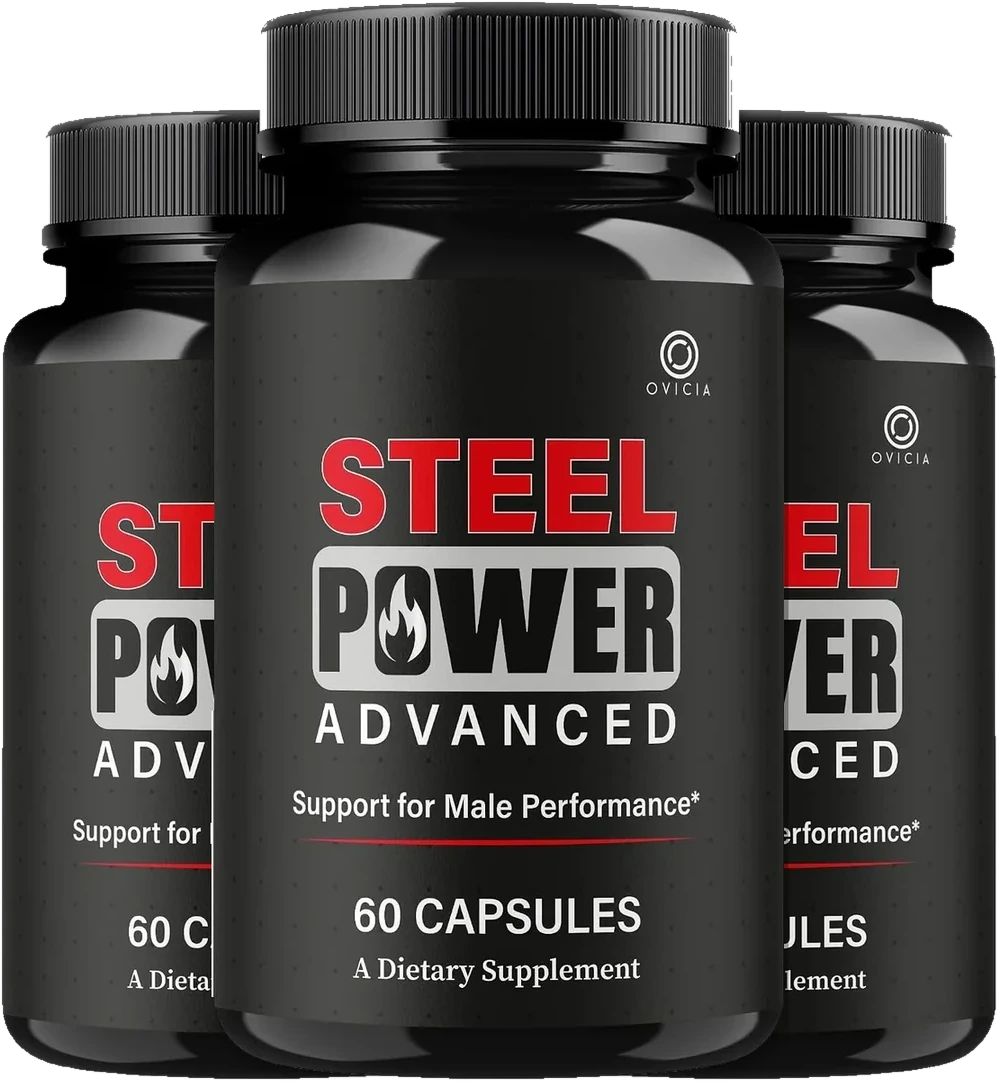
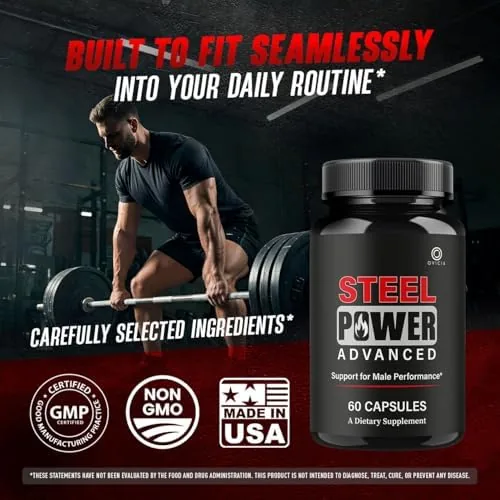
See how Steel Power puts this together
L-citrulline, adaptogens and zinc in one daily capsule — with every ingredient and its evidence laid out.