How Long Do Testosterone Boosters Take to Work? A Realistic Week-by-Week Timeline
Quick Answer: How Long Do Testosterone Boosters Take to Work?
Most testosterone boosters take about eight to twelve weeks of daily use to show their full effect, because that is how long the key botanicals were dosed in clinical studies. Many men notice earlier shifts in energy, mood or sleep within two to four weeks, while hormone-linked benefits build more gradually with consistency, good sleep and training.
- First signals: energy, sleep and mood, often by week 2-4.
- Full window: 8-12 weeks, matching how studies dosed the ingredients.
- Amplifiers: daily consistency, 7-9 hours' sleep, resistance training.
The expectation that causes most disappointment
The fastest way to be let down by a supplement is to expect it to behave like a stimulant. A strong coffee works in twenty minutes; you feel it, then it fades. A natural testosterone booster does the opposite — it works quietly, cumulatively, and mostly below the threshold of what you notice day to day until enough days have stacked up. Understanding that single distinction is the difference between a man who quits at day nine and a man who gets the result the formula was actually designed to deliver.
So how long do testosterone boosters take to work? The short version is at the top of this page: a couple of weeks for the first subtle signals, eight to twelve weeks for the full picture. The rest of this article explains why the timeline looks like that, what you can realistically expect in each phase, and the handful of things that make the whole process faster or slower. Managing that expectation up front is not a sales trick — it is the honest way to keep you from wasting money by giving up too early.
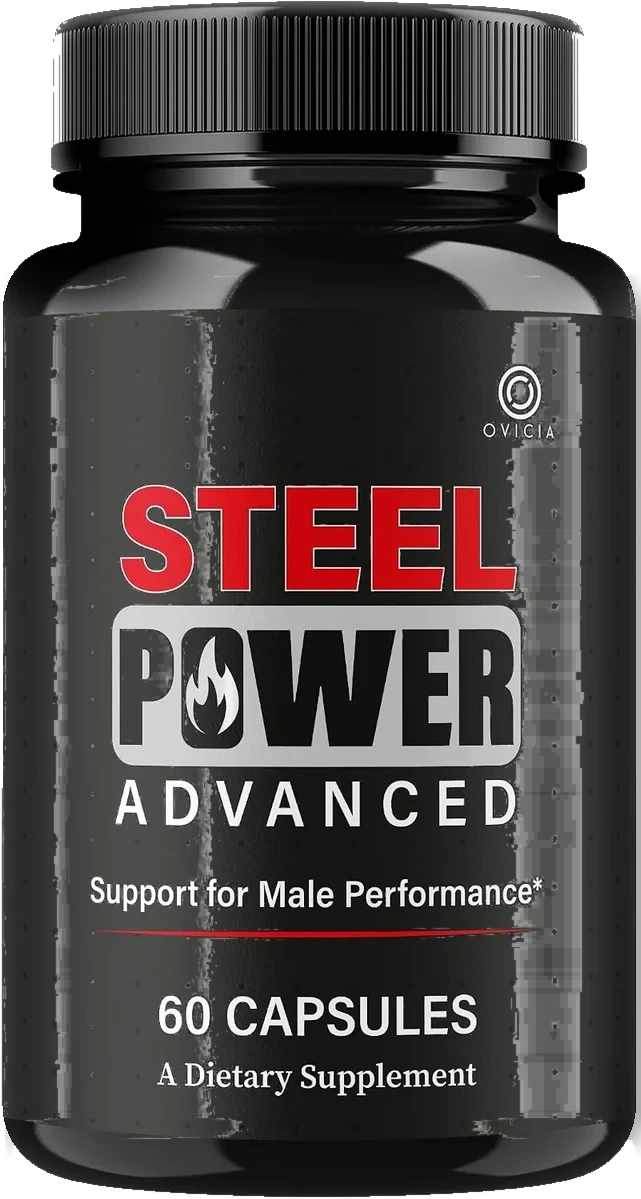
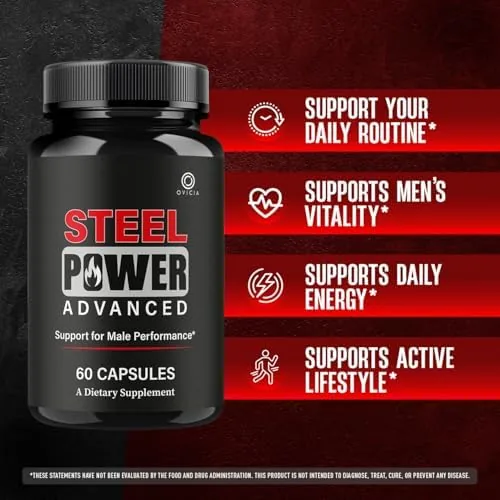
We will use Steel Power as the concrete example, partly because its five actives are named openly and partly because its formula is a useful teaching case: a mix of fast-responding support ingredients and slow-building ones, which is exactly why its timeline has two distinct phases.
Why results take 8 to 12 weeks
The eight-to-twelve-week figure is not marketing. It comes from how the ingredients in this category were actually studied. When researchers test a botanical such as ashwagandha or fenugreek, or a mineral such as zinc, for its effect on vitality and hormone markers in men, they typically dose it daily for eight, ten or twelve weeks and then measure. The change shows up at the end of that window because that is how long the body takes to respond to steady nutritional support.
There is a mechanism behind the patience. Nutrients and adaptogens do not inject a hormone or force a spike; they supply raw materials and gentle signals that your own systems use to work a little better over time. Restoring a mineral you were low in, nudging the stress-hormone balance that adaptogens influence, improving the sleep that overnight testosterone production depends on — none of these is an on-switch. They are more like watering a plant. The result is real, but it accrues.
This is also why a one-month bottle can be genuinely misleading if you judge it too harshly. Thirty days lands you right in the early-signals phase — enough to feel energy and sleep changes, not enough to see where the full effect settles. That mismatch between how the product is sold (in single bottles) and how it works (over three months) is behind a lot of unfair "it did nothing" reviews.
The week-by-week timeline
No two men are identical, so treat this as a realistic map rather than a promise. Sleep, training, diet, starting nutrient status and age all shift the dates. But the shape of the curve is remarkably consistent.
| Phase | What's happening inside | What you may notice |
|---|---|---|
| Weeks 1-2 | Body adjusts; the daily habit forms; nutrient levels begin topping up | Often little yet; possibly a brief adjustment period (see side effects) |
| Weeks 2-4 | Sleep-, stress- and circulation-support ingredients take hold | Steadier energy, deeper sleep, better focus and motivation |
| Weeks 4-8 | Adaptogen and mineral effects accumulate; training recovery compounds | Improved gym recovery, stronger drive, better stamina through the day |
| Weeks 8-12 | Full research-window dosing reached | The fuller picture the formula is built for; benefits feel established |
| Week 12+ | Maintenance; consistency preserves the gains | Reassess honestly — keep going if it earned its place |
Two things are worth calling out. First, the early phase is dominated by the "how you feel" ingredients — sleep, stress, energy — which is why the first wins are subjective rather than measurable. Second, the later phase is where the slower-building support shows up. If you quit at week four because you "only" got better sleep and energy, you left the second half of the benefit on the table.
Give it the run the research used
Steel Power's multi-bottle bundles exist because the ingredients were studied over 8-12 weeks. Set yourself up for the full window, not a half-trial.
Check the Official Steel Power OfferWhat speeds results up (and what slows them down)
You cannot rush biology, but you can stop sabotaging it. The men who see the clearest results in the shortest honest time all do the same unglamorous things, and none of them involve taking more capsules.
Consistency is the whole game. A booster works on a steady daily dose. Missing days and then doubling up resets the accumulation and does nothing good for your stomach. Same time, every day, with food, for the full run.
Sleep is a multiplier, not a bonus. A large share of daily testosterone is produced during sleep, which is why seven to nine hours does more for your results than any single ingredient. Short-changing sleep while taking a booster is like flooring the accelerator with the handbrake on.
Resistance training moves the needle. Lifting weights is one of the few things reliably shown to support healthy testosterone, and it stacks with a supplement rather than competing with it. Even two or three sessions a week changes the trajectory. Our guide to natural ways to boost testosterone through sleep and training covers this layer in full.
What slows you down: chronic under-sleeping, heavy alcohol, crash dieting, and impatience. The last one is the sneakiest — men quit right before the compounding phase, then conclude nothing works.
And to head off the most common shortcut myth directly: taking more does not speed results up. Doubling the serving does not double the effect; it mostly increases the odds of the mild, dose-related testosterone booster side effects we cover separately. The lever that actually shortens your time-to-result is your lifestyle, not your dose.
Judge a booster the way researchers did: at the end of the window, not in the middle. A verdict at week two is a verdict on your patience, not the product.
Does age, starting point or health change the timeline?
Yes, and it is worth being realistic about it. A man in his late twenties with a decent diet and a genuine but modest gap will often feel the early shifts sooner and see a cleaner result than a man in his fifties who is under-slept and sedentary. That is not a knock on either — it simply reflects how far each man has to travel and how much of his result is being throttled by things a supplement cannot touch.
Your starting nutrient status matters too. If you were genuinely low in a mineral such as zinc, correcting that shortfall can produce a more noticeable change than it would in someone who was already replete, because you are filling a real gap rather than topping up a full tank. This is the same reason two men on the identical product can honestly report very different experiences: they did not start from the same place. It is also why comparing your week-six self to your own baseline notes is far more useful than comparing yourself to a stranger's review online.
Age can also stretch the window slightly. Older men sometimes need the full twelve weeks, and the consistent daily habit becomes even more important, because there is less margin for missed days. None of this changes the shape of the curve — early signals first, fuller effect later — it just shifts the dates a little and rewards patience even more.
How to run Steel Power for a fair test
Putting it together, here is what a fair, honest trial looks like. Take the label serving daily, with a meal, at a consistent time. Protect your sleep and get some resistance training in. Keep a rough note of energy, sleep quality, gym recovery and drive at the start, at four weeks and at eight weeks, so you are comparing memory to notes rather than to optimism.
On supply: a single bottle is thirty days, which only covers the early-signals phase, so most men choose a three-bottle run of roughly ninety days to actually reach the full window — the reason the multi-bottle bundles are priced the way they are. If, at the end of a genuine ninety-day run with sleep and training in place, the product has not earned its spot, you will know clearly and can stop. That is a far more useful outcome than a vague thirty-day maybe. When you are ready to hold a real label against that timeline, the Steel Power formula names each of its five actives, which is the starting point for matching a product against the studied amounts.
Medical note: this article is general information, not medical advice, and it does not claim any supplement treats, cures or prevents a condition. Individual results vary and timelines are not guaranteed. Speak to a qualified healthcare professional before starting any supplement, especially alongside prescription medication or an existing health condition.
Frequently asked questions
When will I feel the first effects of a testosterone booster?
Many men notice the first subtle effects — steadier energy, better sleep, a lift in mood or motivation — somewhere between two and four weeks of consistent daily use. These early shifts come from ingredients that support stress, sleep and circulation, which respond faster than hormone-linked changes. If you feel nothing at all by week four, check that you are taking it daily, with food, and getting enough sleep.
Why do results take 8-12 weeks?
Results take eight to twelve weeks because that is the window over which the key botanicals were dosed in most clinical studies before researchers measured change. Nutrients and adaptogens work by gradually supporting your body's own processes rather than forcing a spike, so the meaningful effects accumulate over weeks of steady intake. Biology simply does not turn on an hour after a capsule.
Does taking more speed up results?
No. Taking more than the label serving does not speed up results and mainly raises the chance of mild side effects such as stomach upset. Benefits in this category come from consistent daily intake at the studied dose over time, not from a larger single serving. The faster route is better sleep, resistance training and not missing days — never a double dose.
How long should I run one bottle of Steel Power?
A single bottle of Steel Power is a 30-day supply, which is enough to notice early energy and sleep shifts but usually not the full effect. Because the research window is eight to twelve weeks, most men give it a three-bottle, roughly 90-day run before judging results — which is also why the multi-bottle bundles exist and tend to be the sensible choice.
Scientific references
- NIH Office of Dietary Supplements — Zinc fact sheet and daily requirements
- NIH NCCIH — Ashwagandha: what the research shows and typical study durations
- CDC — sleep recommendations for adults (7-9 hours)
- Harvard Health — testosterone: what it does and doesn't do
- NIH Office of Dietary Supplements — supplement safety and quality information
Related reading
Set up a proper 90-day run
The multi-bottle bundles cover the full 8-12 week research window and ship with a money-back guarantee, so you can give Steel Power a fair test instead of a half one.